Category: Body & Mind

This topic covers all things mind, body, and health related – yoga, climbing, nutrition, vegetarianism, mindset, meditation, and general fitness, as well as maintaining/improving those things during travel.

  • Feelings vs. Thoughts, outside

    I’m at a point in my life where I’m giving more credence to my feelings, rather than only trusting my brain and dismissing my feelings as invalid. It really bums me out that little kids learn to do that in our society.

    This long transformation has felt more like a shattering at times, but it is born out of a realization that I must “return” to myself if I want to feel alright.

    One pervasive feeling in my life the past few years is that being connected to nature is absolutely essential for me to live an embodied, healthy life.

    I have a lot of thoughts about that feeling.

    The most persistent thought is that an affinity to the outdoors and nature is contradictory of my educational and professional background.

    I got an MBA. Aka consumerism-central. My education wants me to focus on dollars, so why am I drawn to something that can’t (and likely shouldn’t) translate into dollars? And can I make these things make sense?

    Am I just on the backswing from the MBA? Naturally swinging the opposite way before correcting somewhere in the middle? Or maybe it’s some kind of personal rebellion against capitalism. But I’m not even at an extreme level of climate-activism, or consumerism, or anything really… I’m somewhere in between, but my mind spins between the extremes.

    Regardless, I’m following my feelings like never before. That’s why I moved into the van. It’s why I centered climbing in my life. It’s why I stay in rural places.

    My work

    My career, at least lately, has been focused on doing “good” or at least less worse. I’ve been working in climate tech, teaching yoga, taking photos, and instructing rock climbing.

    And I have been spending more time on “non-productive” activities, such as learning to feel. And working to understand who I am (beyond a nervously tweaky cog in an economy).

    This all feels aligned, but I have thoughts about efficiency and optimizing which feel icky in this context. So I’ve tried to sort out how this all fits/makes sense.

    Once in undergrad, a friend referred to me as a “hilarious contradiction” (an interesting one to translate from Chinese, during my study abroad). And I felt seen.

    As a Systems Engineer, I was trained to understand complex relationships, which worked well because I spent a lifetime studying that in the interpersonal context. So now I’m spending a lot of time thinking about how this hilarious contradiction I call life actually makes total Katie-sense.

    Validity

    Intellectually, I know that doing activities that don’t earn money have value. But it certainly feels like they don’t, at least not to other people. And I really do want to have value in the eyes of other people.

    If I prioritize non-traditional, less lucrative, personal and professional activities, can I live a public life, be valued, belong? If it doesn’t earn me money, does it still have value? Intellectually, the answer is of course.

    But as someone with an ingrained sense that dollar value is an indication of worth…. it feels like those activities are somehow unworthy.

    Maybe I’m just still shedding some old conditioning about working in a proper j-o-b to be valued in society.

    Ultimately, I’m trying to accept that my feelings and my thoughts are both valid. And I’m trying to allow myself to spend life energy on things my brain says are unworthy, but my heart says are essential. To me, this apparent contradiction is not just worth untangling, it’s required.

    The untangling

    So how does all this disparate focus “make sense”? Maybe I have too many tabs open and it doesn’t make sense. Or maybe I’ll only really know a decade or two from now, looking back at it in hindsight.

    So far though, the through lines I have found are: 1) the mind-body connection and 2) the human-nature connection.

    I think there is an under-explored triad there: the mind-body-nature connection. Is this something I can commercialize? Probably not. But I’m trying to internalize it instead.

    I’d categorize this study of the mind-body-nature triad under eco-psychology. I have become something of an amaetur eco-psychologist.

    Human-nature connection

    The human-nature connection is the relationship between people and the natural world. It’s spiritual and soulful, rather than intellectual.

    Recovering from my own dysfunction has led me away from a computer, outside over and over again, feet in the dirt. But no matter how “right” it feels, there is the pull of a computer… the magnetism of doing something others deem worthwhile. And historically for me that has involved a computer.

    But it’s not just a me thing. Numerous studies highlight the importance of the human-nature connection.

    • Walking in a forest barefoot increases serotonin, decreases inflammation (source)
    • Spending 20+ minutes in a natural environment produces measurable reduction in cortisol (source)

    The list goes on. But the defragmentation that occurs outdoors is real in my lived experience.

    This isn’t a particularly radical idea. Humans evolved in relationship with the natural world, and a growing body of research suggests that time in nature improves mood, reduces stress, and supports wellbeing. What surprises me is not that nature helps, but how quickly I notice its absence.

    Mind-body connection

    The mind-body connection is the recognition that our thoughts, emotions, and physical experiences are deeply intertwined. Yoga was my first real introduction to this idea. Before then, if I couldn’t logically justify an emotion, I tried to treat it as irrelevant.

    Over time, I’ve learned that the body often knows things before the mind catches up. Stress shows up in muscles, breath, digestion, sleep, and energy levels. Joy, grief, anxiety, and peace all have physical signatures. The more attention I pay to those signals, the more information I have about what I actually need.

    And research backs it up, from ancient yoga claims being validated to finding gut-brain connections previously ignored:

    • yogic breathing (pranayama) produces beneficial neurocognitive, psychophysiological, respiratory, biochemical and metabolic changes (source)
    • yoga asana (movement) produces a significant increase in mental wellbeing (source)
    • gut microbiota directly affects behavior and mental health (source)

    Also see The Body Keeps the Score by Dr. Bessel van der Kolk.

    The mind-body-nature connection

    What interests me most isn’t the human-nature connection or the mind-body connection in isolation. It’s the intersection between them.

    And I think it’s obviously all connected: the mind, the physical body, and connection to nature (whether by spending time there, or eating food directly from the earth).

    The closer I am to nature, the easier it becomes to notice what I’m feeling beneath the thinking and the noise of productivity, achievement, and distraction.

    Maybe that’s why so many of the activities that feel essential to me, yoga, climbing, hiking, photography, even living in a van – sit at this intersection.

    They are practices that bring me into relationship with both my internal landscape and the landscape around me. The more I explore that triad of mind, body, and nature, the more it feels less like a hobby and more like a framework for understanding what it means to live well.
  • Dirtbagging. Living the cozy #crvlife

    Dirtbagging. Living the cozy #crvlife

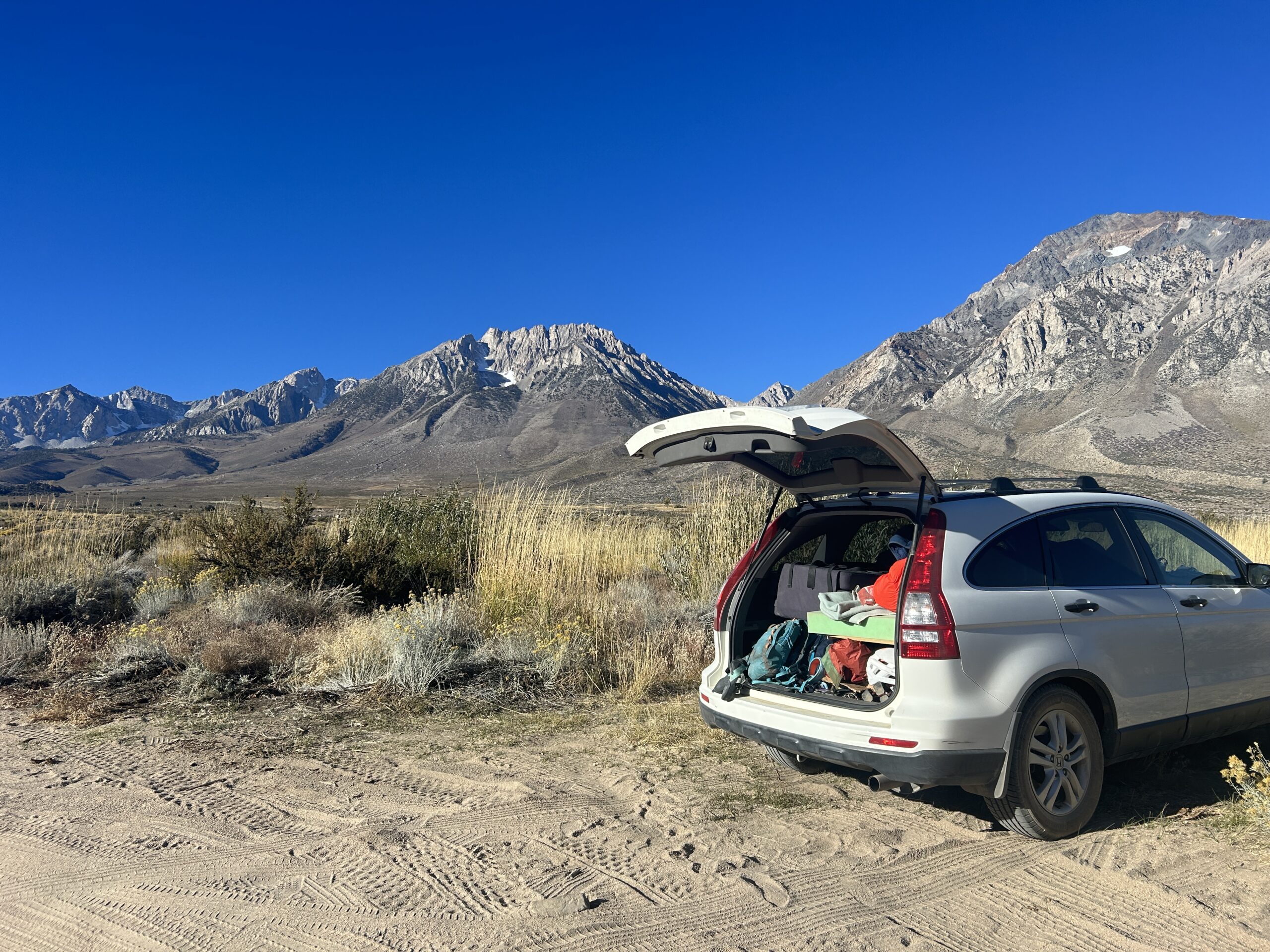
    car with mountains

    For the better part of the past 1 year, I’ve been living in my 2011 Honda CRV. I’m a climbing dirtbag. At the start of my dirtbag era, I kept my apartment, because I thought this era would quickly end. But I have quickly made it a comfortable lifestyle. After not visiting the apartment for months at a time, I decided to get rid of the home base all together and opt for a PO Box instead. The car is pretty cozy, and when I did visit the apartment I suffered from terrible insomnia. In retrospect, the choice was obvious, but there was lots of turmoil involved in making the decision, which I addressed in a post on TinyBuddha. Here, I’m focusing on how I managed to get so cozy living the #crvlife.

    Building out the CRV:

    1. Remove Seats: This era of CRV has back seats that do not fold flat. I took out the passenger side and attached middle seat to have space for my bed platform. Initially I left them in, but its much better without them in terms of storage and stability.
      • It’s pretty straightforward to remove the seats once you pop off the plastic bolt covers. There are 4 bolts and you need a socket wrench to undo them. The seats are quite heavy also. I saved the bolts and used them to attach my sleeping platform.
    2. Sleeping setup: This is basically the only “build” I actually did. I sleep with my head toward the front of the car and prop the passenger seat forward when I sleep so I can dangle my feet.
      • Materials:
        • sheet of plywood – standard size, composite because it’s less splintery
        • 4×4 – 12′
        • 1×1 – 12′
        • package of screws & corresponding bit
        • drill
        • L shaped metal brackets
        • straight metal brackets
        • wood glue
        • the bolts I unscrewed
        • socket wrench
      • Platform: I had home depot cut my plywood to size. For me that was 70″ long and 26″ wide. When I got it home, I cut a diagonal corner for the back passenger side of the platform, so it could be propped up on the lip of the wheel well (this is one “leg” of the bed).
      • Framing: For sturdiness, I added two strips of 1×1 framing along each long side of the bed platform. I attached it with screws and wood glue.
      • Front Legs: The front “legs” were made from one solid block of wood. I used 24″ cuts of my 4×4 and stacked them on top of one another, attaching them together with straight metal brackets and wood glue to one another. Then I attached them to the car with the L brackets, straight brackets, and bolts from the seat removal. This block of wood is not at the end of the plywood, it’s around a foot or so in from the edge, and supports the shoulder area of the sleeping platform. I attached the platform to the front “legs” with L brackets and screws. and attaches to the 1×1 framing with L brackets.
      • Back Legs: The back “legs” are each done pretty differently. The outside edge rests on top of the car itself. For me, that provided the most snug fit, and most space underneath the platform for storage. For the other back leg, I used the remainder of the 4×4 piece, it’s just under 12″. I attached it to the framing using L brackets. It’s very sturdy and falls around mid-calf, rather than at the very back of the platform. That allows me access to the things under it more conveniently.
      • Comfiness: I use a 6′ piece of 4″ upholstery foam from JoAnn fabric as my mattress. I put a sleeping pad on top of that for warmth. Then I use a 0 F sleeping bag and a wool blanket on top of that in winter.
    3. Electricity & warmth: I use a Jackery and a heating pad when it gets below 30 F. I just use a small battery to charge my phone at night and I get about 2 nights off a charge. I have a solar lantern for when it gets dark and I want to read. But typically I sleep when the sun says it’s time.
    4. Curtains: I don’t use them! I can cover a window or two if needed with a towel, but I normally camp in rural places rather than in town. Plus, without curtains you can see the stars better 🙂
    5. Storage: A roof rack is in my future. But for now it all fits inside. Food in the driver’s side back footwell. Crash pad next to bed, clothing in bags under that. Climbing & camping gear under the bed. Toiletries, coats, water and electronics under the passenger back footwell. And miscellaneous in front seat.
    parked somewhere good

    Living on the Road:

    Budgeting and Finance:

    1. Frugal Living: I keep expenses low. Most of my costs are health insurance and food. Climbing is free.
    2. Food: I use the Eureka Spark single burner camp stove and I cook a lot of simple, repetitive things. Protein bread + avo + egg = chef’s kiss. One pro of living in your car in winter is that you don’t need to buy ice or anything if it’s cold out and food stays good for a long time.
    3. Passes and Permits: I normally sleep on BLM land, which I find via Gaia, but I also have a national parks pass.

    Hygiene and Comfort:

    laundry
    1. Shower Solutions: It depends on location
      • I belong to Planet Fitness, which works great in bigger cities. Plus you can sleep in the parking lot if needed.
      • Hostels and gas stations often have showers for a fee, which is convenient.
      • An occassional hotel night comes in handy to recharge, refill, and shower all at once.
      • In between showers, I jump in lakes/rivers.
      • If I’m not showering that day, I wipe down sweaty areas with antibacterial wipes (not baby wipes). Antibacterial wipes keep bacteria levels down on the skin, which is what causes BO.
    2. Laundry: Laundromats can be a great place to get wifi and stay warm if it’s chilly on a winter evening.

    Safety and Security:

    1. Knowledge: I try to stay in places I know and if I’m going somewhere new I arrive in daylight and camp with friends if possible. I always give myself permission to leave an area at any point and I try to have a backup plan if I’m sleeping somewhere I’ve never been.
    2. Vehicle Maintenance: I get regular car checkups. That said, I’ve popped a couple tires on dirt roads at this point, so it helps to be prepared. I check to make sure my spare is inflated, plus I’m a AAA member, and I have a portable air pump and some patching spray for temporary fixes.
    3. Security: I don’t keep valuables in my car, but I do always lock my car and keep things out of sight.

    So far, the #crvlife has been good to me. It’s hard to believe a year passed this quickly. It has made me realize how little I really need to feel at home and happy.

  • My first “epic”

    My first “epic”

    The day ended with me hallucinating. Oh, and it lasted a full 24 hours.

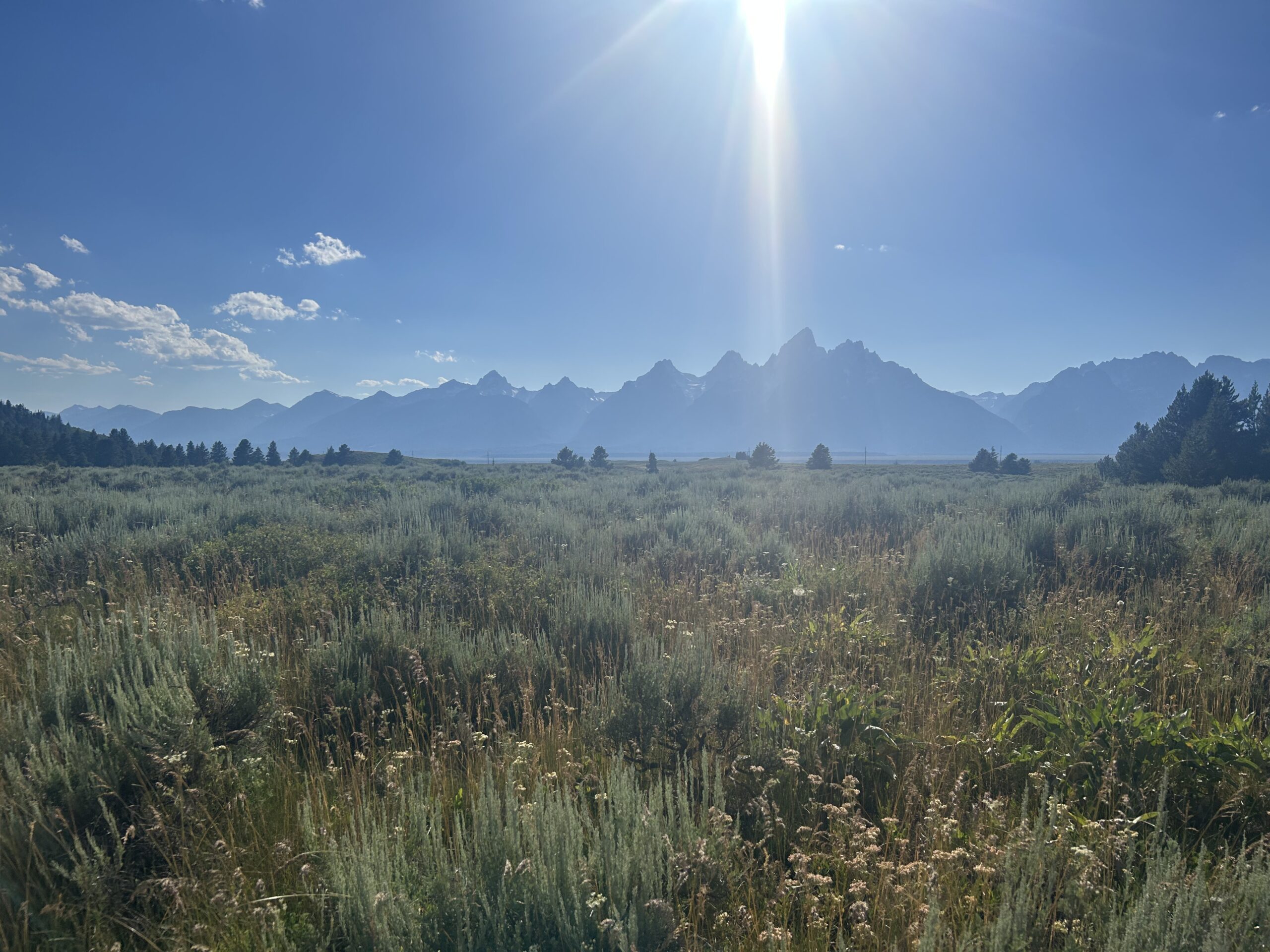
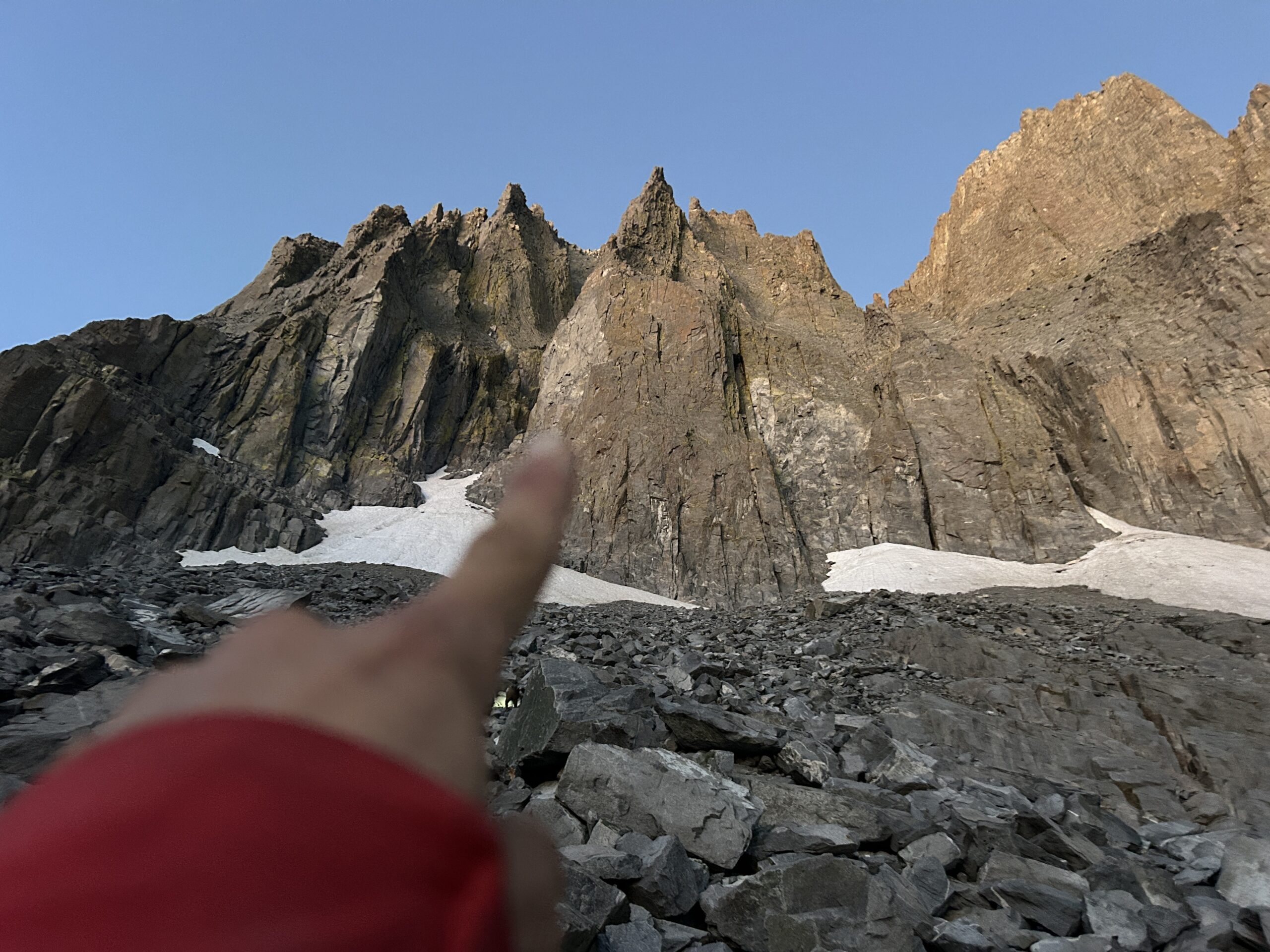
    As two parties of two, we successfully summited the Grand Teton via the Full Exum Ridge route.

    We slept for a few hours in our cars at the base of the trailhead and my partner and I set off around 3am. I’m a bit of a slow hiker when much weight and/or elevation gain is involved, so I wanted to get going. But we decided to wait for the other two members of our party where the trail forks, but the fork wasn’t very far in, so the head start didn’t help much. And my hiking speed wound up not being a limiting factor, thankfully.

    We got lost on the skree field on the way to the lower saddle, both on the way up and the way down. On the way up, we came upon one of the guide tents, which was occupied, so they gave us directions to the lower saddle. They also gave us cheese, which was fantastic.

    At the lower saddle, water was flowing through a little pipe, so we filled up, put our packs in bear containers, and got ready for a long day ahead.

    The Lower Exum is the “harder” climbing and Upper is mostly just scrambling (5.7). I started with the chimney pitch which went quickly and we made good progress, despite a left turn I made with my route finding, which made pitch 3 a bit more difficult and rope draggy than necessary.

    All was going relatively well until roughly the end of the Lower Exum, when I curled into the fetal position, head in hands, miserable. I had no clue what was going on, but I felt like death and had no energy. It turns out waking up at 2:30am and doing 7k vert and then going climbing… is taxing on the body. Plus it was my first mission of this magnitude so I had no idea what to expect. Luckily my partner, Sam, explained that I was bonking and needed carbs. My sandwich fixed me right up, but I’d be lying if I said I didn’t cry. He was thoroughly entertained and I have pictures to commemorate the occasion.

    Once we got to the upper section, we were able to simul the majority of the climbing. There was more crying… but not because I wasn’t enjoying myself. I think my body was just so fully worn out, and we were waiting for our friends, and I just broke down. Plus I was climbing with an ex-bf, which had it’s own emotions wrapped up in it LOL. We were still on good enough terms to go climbing together though.

    The top was pretty snowy, and we were blessed with beautiful still weather and clear skies. We summited as the sun was beginning to go down, around 7:45. As a gumby for this magnitude of climb, it didn’t register in my brain until then that we were only halfway. After the other party of two friends arrived at the top, and after taking some summit selfies, we began our descent. The rappels were fine, but navigating the skree with a backpack made me think my legs were going to give out. I was genuinely concerned I’d fall and hurt myself. I started to fall behind the boys. And it started to get dark.

    We arrived back at the saddle around 11pm, cold and wrecked. We huddled in the bivy spot for a little while deciding what to do. I knew I wouldn’t be able to get warm, which meant I wouldn’t sleep, which meant hiking out the next day would be even harder. So I voted to descend. And they ultimately agreed.

    That’s when we got lost again in the skree, in the dark. And there isn’t much of a trail in the skree, plus our headlamps only went so far. We could hear rockfall, which was a bit alarming. I was also worried about grizzlies. But with short rests and some navigation issues we made it back to the main trail.

    We started seeing folks beginning their ascent… and they seemed like figments of my imagination. I felt like a zombie. After a few more miles, I started to hallucinate. I saw little leprechauns in the forest, little owl families, ghosts, and bears. I was quite tired. Somehow the trail down seemed to continue forever, around another switchback, down another fork. I felt fully dissociated like I did not exist. My legs kept going though, just very slowly.

    Back at camp, my mind was running on fumes and I found it difficult to fall asleep. Eventually I got a few hours of sleep, then I went to Whole Foods and met the boys at Jenny Lake for a bath. I was grateful for the team, my partner, and the weather on the adventure.

    If I were to do it again, I’d bring more layers and more carbs. Oh and I’d start earlier.